
Features
Overwatch 2 Aimbot Settings Explained: FOV, Smoothness, Target Lock and More
Aimbot menus can look complicated at first because they often include far more than a single enable button. If you are comparing Overwatch 2 aimbot products, understanding the settings is much more useful than simply counting how many options are listed.
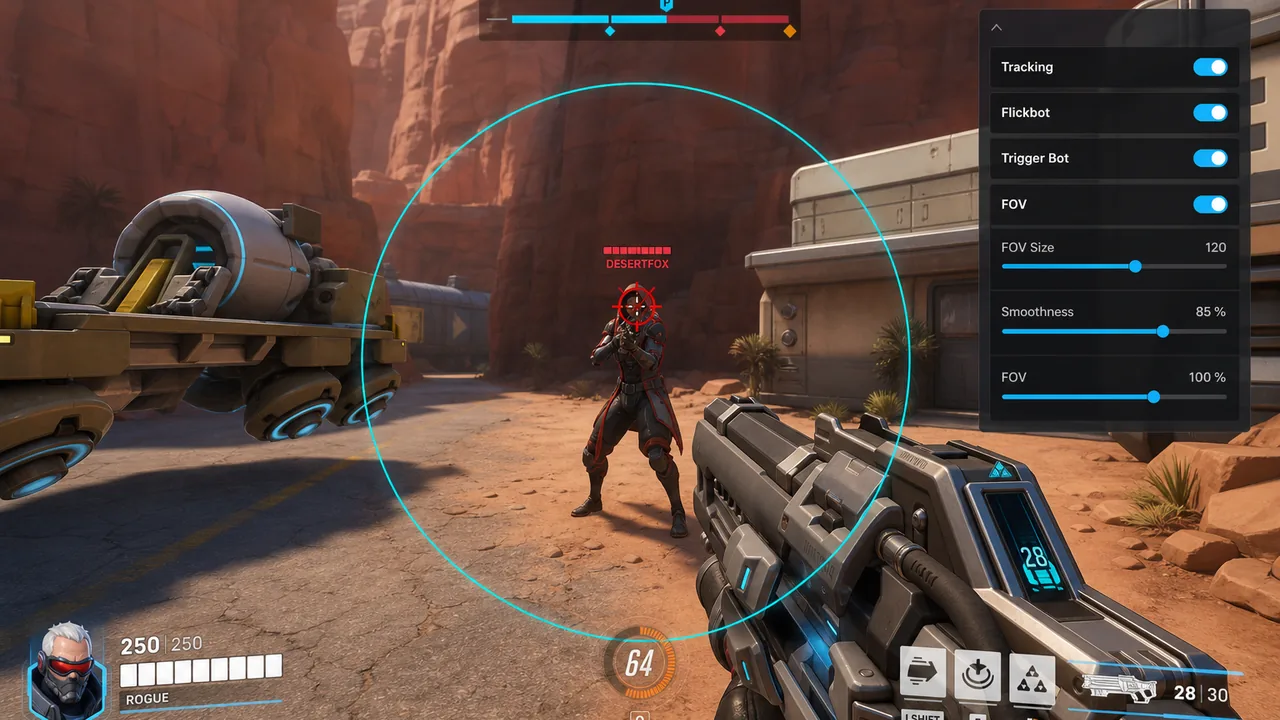
FOV
FOV stands for field of view.
In an aimbot menu, it generally controls the area around the crosshair where potential targets can be considered.
A smaller FOV means a narrower targeting area. A larger FOV means a wider one.
Overwatch 2 Byster currently includes both FOV and an option to display the FOV area on screen.
Smoothness
Smoothness controls how gradually the aim moves toward a target.
A higher smoothing value generally results in slower and less abrupt movement, while lower smoothing can produce quicker movement.
Byster includes a Smooth setting as part of its aimbot configuration.
Target Lock
Target Lock determines how the aimbot decides which player to prioritize.
The current Byster menu offers target lock modes based on distance, proximity to the crosshair and automatic selection.
Bone Target
Some aimbots can prioritize different areas of the character model.
Byster currently lets the user select a preferred target area such as head, body or legs.
Max Distance
Maximum distance limits how far away an eligible target can be.
This can make a configuration more restrictive and can reduce the number of targets considered outside a chosen range.
Byster includes maximum distance settings for the aimbot.
Prediction
Moving targets are harder to track than stationary ones.
Prediction is designed to account for target movement when determining where the aim should go.
The current Byster feature list includes movement prediction.
Target Switch Delay
Target switching is another important setting.
Byster includes a configurable delay between switching targets, measured in milliseconds.
This gives users more control over how aggressively the system changes targets.
Through Wall
The current Byster aimbot also includes a Through Wall option that allows aiming without the normal visibility check.
This is closely related to the overlap between aim assistance and wall visibility features.
Mouse DPI and Game Sensitivity
Your mouse DPI and in game sensitivity affect how your aim behaves.
Byster includes corresponding adjustment fields so the aimbot can be configured around the user's input settings.
Final Thoughts
The most important Overwatch 2 aimbot settings are not necessarily the flashiest ones.
FOV determines the targeting area. Smoothness affects aim movement. Target Lock controls target selection. Bone Target chooses the preferred body area. Prediction helps with moving targets.
Understanding those settings makes it much easier to compare different products and configure a menu around the features you actually want.